Urim and Thummim
Urim and Thummim are two polished stones, one black and one white, given to Santiago by Melchizedek, the King of Salem, as a divinatory tool to help him read omens when his own intuition fails. They serve as a tangible link to the king's wisdom and a recurring symbol of the boy's commitment to his Personal Legend, appearing at critical junctures to confirm his path, remind him of his promise to make his own decisions, and ultimately become part of the treasure itself.
Origin and Nature
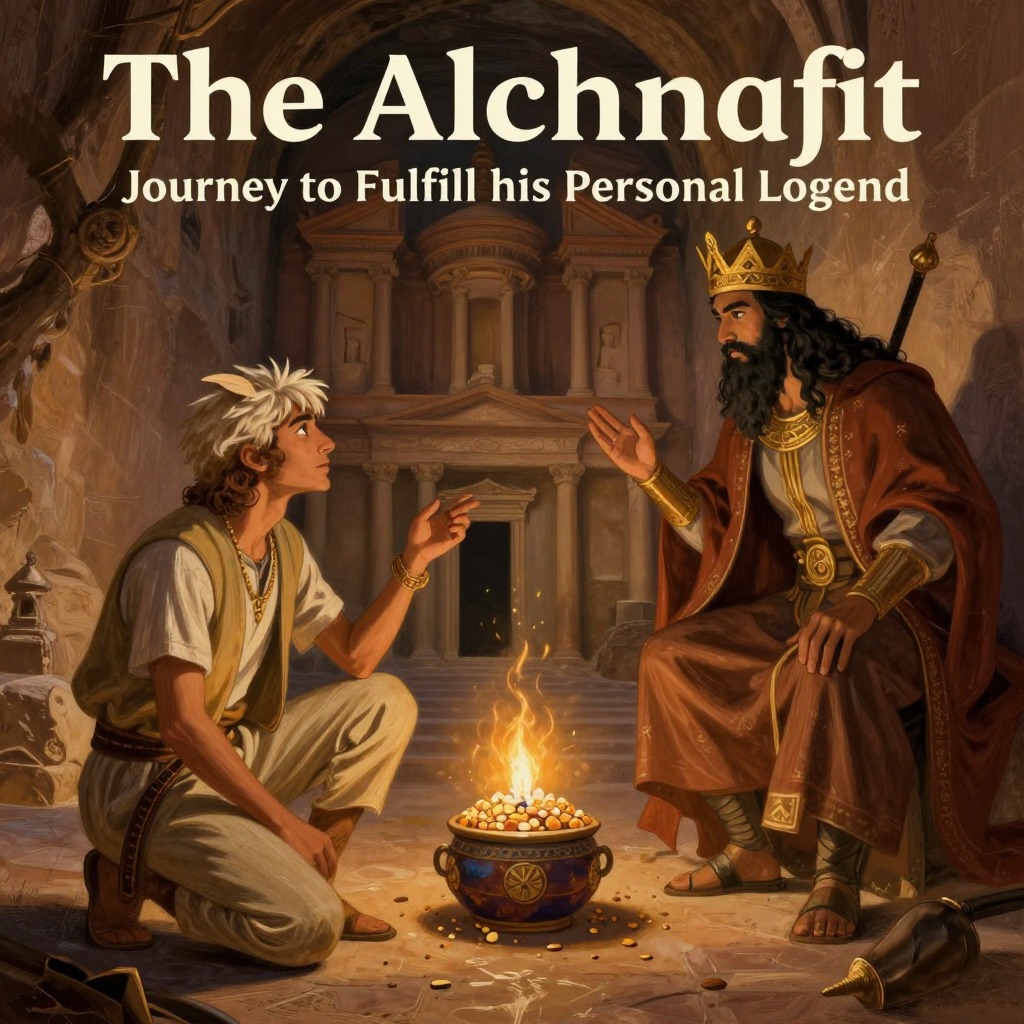
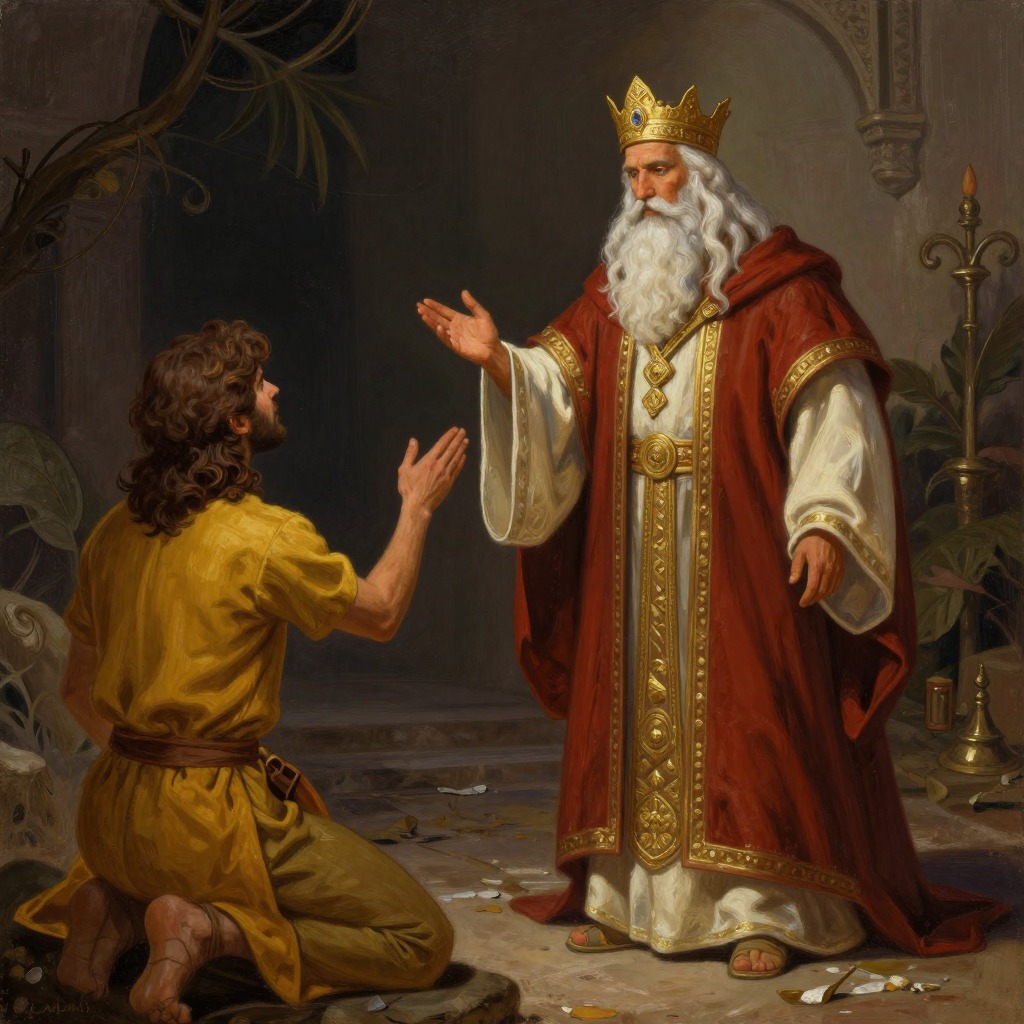
Melchizedek presented the stones to Santiago during their second meeting in the plaza of Tarifa, after the boy had brought six sheep as payment for guidance to the hidden treasure. The old king explained that the stones were called Urim and Thummim and had been embedded at the center of his heavy gold breastplate, covered with precious stones. The black stone signifies "yes," and the white stone signifies "no." Melchizedek instructed the boy to use them only when he was unable to read the omens himself, and always to ask an objective question. The Englishman later confirmed the stones' biblical origin, telling Santiago that they were the only form of divination permitted by God and that the priests of ancient Israel carried them in a golden breastplate. The Englishman himself possessed an identical pair, which he produced from his own pocket when he recognized the stones in Santiago's hands at the caravan warehouse.
Use and Operation
Santiago first used the stones in the empty marketplace of Tangier, immediately after being robbed of all his money by the young man who had offered to guide him to the Pyramids. Feeling desperate and alone, he took out Urim and Thummim and asked whether the old king's blessing was still with him. He drew one stone and received "yes." When he then asked whether he would find his treasure, both stones pushed through a hole in his pouch—a hole he had never noticed before—and fell to the ground. Rather than mending the pouch, Santiago interpreted this as an omen in itself, recalling the king's instruction to "learn to recognize omens, and follow them." He decided then that he would make his own decisions from that point forward, and that the stones could fall through the hole any time they wanted. For nearly a year afterward, while working for the crystal merchant, Santiago never used Urim and Thummim again, because Egypt had become as distant a dream for him as Mecca was for the merchant. The stones lay forgotten in his old shepherd's pouch until the morning he decided to leave the crystal shop, when they fell to the floor as he retrieved his jacket, startling him into remembering the old king and his own destiny.
Recognition and Symbolic Meaning
When Santiago joined the caravan to Al-Fayoum, he took out Urim and Thummim in the warehouse and began playing with them, which immediately caught the attention of the Englishman. The Englishman recognized the stones by name and explained their biblical significance, noting that they were made of rock crystal and were not worth much in material terms, but that those who knew about such things would recognize them. This encounter served as an omen for the Englishman, who declared that it was no coincidence he had met Santiago with Urim and Thummim in his hand. The stones thus functioned as a bridge between the two seekers, confirming that both were on paths guided by the same universal language. Throughout the rest of his journey, Santiago carried the stones as a reminder of the old king and of the principle that when one truly desires something, the universe conspires to help achieve it.
Final Role and Significance
After discovering the treasure chest beneath the sycamore tree at the abandoned church, Santiago took out Urim and Thummim from his bag and placed them inside the chest. He reflected that he had used the two stones only once—that morning in the marketplace—and that his life and path had always provided him with enough omens without needing to consult them. The stones became part of his new treasure, not for their material value, but as a reminder of Melchizedek, whom he would never see again. In this final act, Urim and Thummim complete their transformation from a practical divinatory tool into a symbolic artifact of the journey itself: they represent the king's guidance, the boy's growth toward self-reliance, and the truth that the most important omens are those one learns to read directly from the world.